6 min read
Himachal Pradesh is often reduced to snow and viewpoints. The mountains are only the setting; the culture is what makes a valley here feel different from the next one over.
The devta system
Across the Kullu and Mandi valleys, each village has its own devta — a local deity carried in a decorated palanquin and consulted on questions the village takes seriously. Processions of these deities, with drums and long horns, are still part of ordinary life rather than performance.
The best-known gathering is Kullu Dussehra, when hundreds of village deities travel to Dhalpur maidan in Kullu, about 40 km from Manali. It begins when Dussehra ends elsewhere in India, and runs for roughly a week in October.
Building in wood and stone
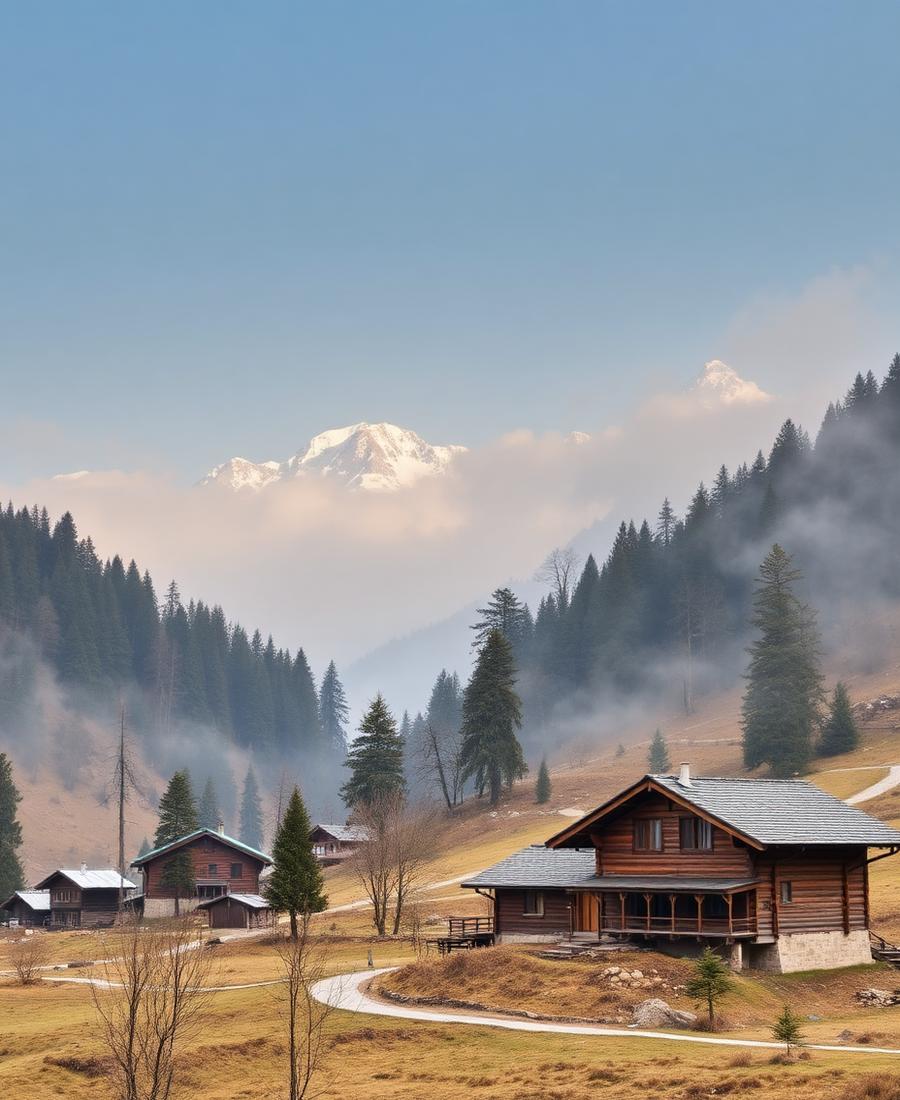
Traditional kath-kuni construction alternates layers of deodar timber and dry stone without mortar — a technique that has survived earthquakes for centuries. You will see it in old village houses and in temples such as Hadimba in Manali, with its tiered pagoda roof.
Slate roofs, carved balconies and shaded verandahs are not decoration; they are answers to snow load, monsoon and long winters spent indoors.
Wool, weave and pattu
Himachali weaving is best known through the Kullu shawl, with its bands of geometric colour at the border, and the pattu worn by women in the higher valleys. Kinnauri caps with their green-and-gold band have become a state-wide emblem.
Co-operative showrooms around Kullu and Bhuntar sell handloom pieces directly; the difference in weight and warmth against a machine-made shawl is immediate.
Food and the mountain year
A dham — the traditional festive meal served on leaf plates, cooked by botis and eaten seated on the floor — is the clearest window into Himachali food: rajma madra, khatta, sepu vadi, sweet rice. Everyday hill food is simpler: siddu steamed bread, rajma-chawal, buckwheat and river trout.
The year still turns on the orchard calendar — apple blossom in spring, harvest and packing sheds from late summer, and a quiet, snowed-in winter. Travelling with that rhythm, rather than against it, is what makes a visit feel like more than sightseeing.